topappreviewsites may earn a commission when you buy through links on this page, at no extra cost to you. This does not affect our ratings.
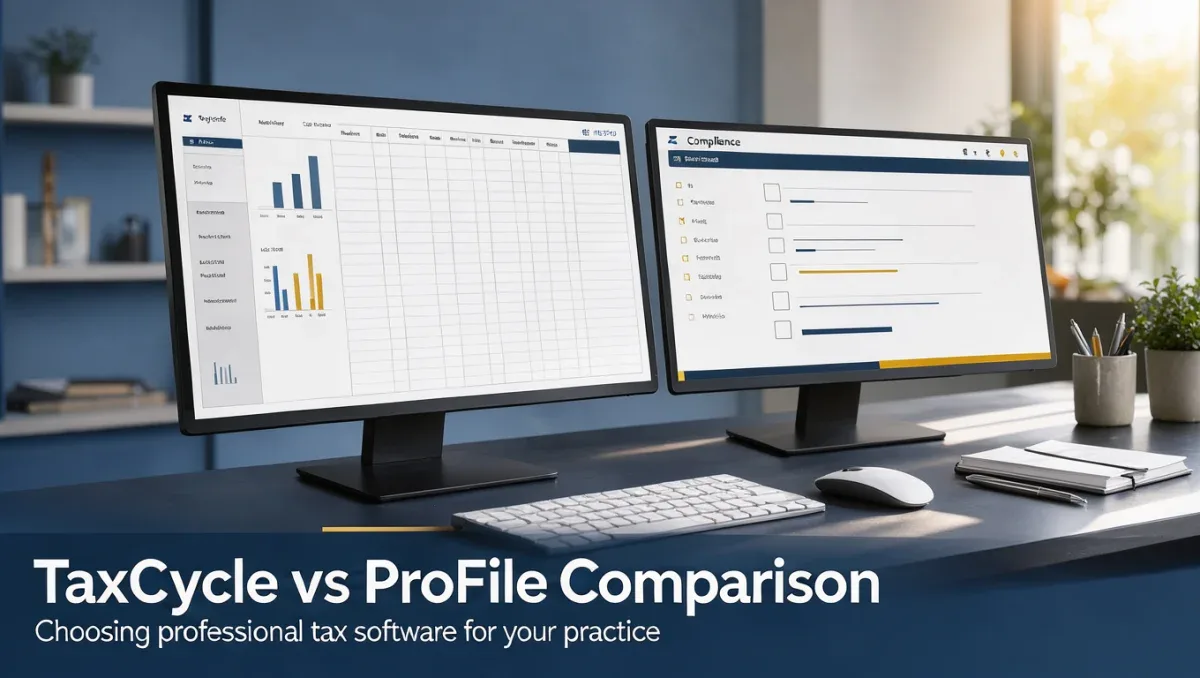
Picking between taxcycle vs profile is one of the bigger software decisions a professional tax preparer will make this year. The choice usually comes down to whether your team wants a modern, connected workflow or a proven, module-driven system built around traditional forms. At Top App Review Sites, we looked at how each product handles Canadian personal and corporate filings so you can match the right tool to the 2026 season.
Both products are built for accountants, bookkeepers, and tax preparation firms juggling complex client files. They cover the same compliance forms and electronic transmission needs, but they get there in noticeably different ways. Working through this comparison will show you which approach lines up with how your office actually runs day to day.
Short answer: Go with TaxCycle if your practice wants fast navigation and automatic data linking across family returns, scoring 8.6/10 overall. Go with ProFile if your office is comfortable with form-centric navigation and traditional processing structures, scoring 8.2/10 overall.
| Evaluation Metric | TaxCycle | ProFile |
|---|---|---|
| topappreviewsites score | 8.6/10 | 8.2/10 |
| Best for | Firms wanting modern workflow navigation and interconnected family return processing | Practices preferring traditional batch filing workflows and form-centric navigation |
| Core focus | Streamlined return preparation, visual error review, and multi-year data carrying | Structured multi-module tax compliance and standardized form entry routines |
| Consider if | Your team values rapid navigation and integrated review ribbons across returns | Your preparers are accustomed to standard form indexing and classical compliance tools |
1. How topappreviewsites Compared TaxCycle and ProFile
We compared both platforms on the seven topappreviewsites criteria: features, ease of use, pricing and value, integrations, audience fit, support, and competitive position. Plans, prices, and limits change frequently, so treat the points below as a starting checklist and confirm current details on each official website before you purchase. This article was researched and drafted with AI assistance, then reviewed and edited by the topappreviewsites Editorial Team.
2. How TaxCycle and ProFile differ in focus
TaxCycle is designed to cut down on repetitive manual entry through connected worksheets, active data monitoring, and visual tracking across related returns. It is aimed at tax professionals, small accounting firms, and independent practitioners handling personal, corporate, and trust returns. Its layout leans on consolidated review bars, visual diagnostic messages, and automatic carry-forward between consecutive tax years.
ProFile, developed under Intuit, puts its emphasis on structured data entry and standardized form presentation across individual and business compliance modules. It serves accounting practices, professional bookkeepers, and tax service bureaus that rely on direct form-line calculations and historical record archiving. Its approach centers on traditional form indexing, batch transmission, and familiar diagnostic listings for compliance checks.
3. Which one fits your situation
Choosing between these two tax platforms means matching your office structure and client mix to each product's strengths. The scenarios below reflect situations Canadian tax offices run into most often.
| Situation | Choose TaxCycle if | Choose ProFile if |
|---|---|---|
| Filing complex family returns | You need linked worksheets where partner and dependent data update across connected files at the same time. | Your office prefers filing individual returns one at a time in separate active windows. |
| Training new junior preparers | Your staff benefits from guided diagnostic sidebars and interactive error-resolution prompts. | Your staff already knows traditional government form layouts and direct line-entry codes. |
| Reviewing a high volume of diagnostic errors | You prefer visual warnings sorted by severity directly inside the active worksheet. | You prefer a consolidated bottom-panel auditor list with line-item jump codes. |
| Managing multi-entity corporate structures | You want flexible cross-return referencing and shared schedule linking across entities. | You keep separate module files for each corporate schedule using rigid folder indexing. |
| Handling multi-year client adjustments | You need multi-year comparison views that show historical figures alongside current numbers. | You prefer opening separate archived return files individually to validate history. |
4. How to compare them yourself
The most reliable way to evaluate tax software is to test it directly using anonymized client data. Work through these core criteria during your trial period.
4.1 Features
Rebuild a sample personal return that includes employment slips, self-employment schedules, and foreign property reporting. Check how each platform carries forward prior-year information and recalculates dependent claims. Notice how review warnings appear when required schedule fields are left blank.
4.2 Ease of use
Time how long it takes to locate non-standard provincial tax credits and supplementary forms. Note whether the interface lets you jump quickly between the client summary and detailed calculation pages. Judge how easily a preparer new to the software can move between form schedules without extensive training.
4.3 Pricing and value
Read each provider's official pricing page to understand module bundling, renewal terms, and multi-user licensing. Confirm whether personal, corporate, and trust modules are sold individually or as part of a bundle. Find out how many workstation installations or staff logins each commercial agreement allows.
4.4 Integrations
Verify on the official vendor websites how each application connects with document management systems, client portals, and government electronic filing gateways. Test the export options for financial statement summaries and client letters. Decide whether direct synchronization with your bookkeeping records meets your requirements.
4.5 Audience fit
Assess whether the design suits your practice volume and your staff's technical background. A boutique firm handling many personal returns may value visual data linking, while an established office with senior preparers may prefer legacy keyboard shortcuts. Confirm the platform covers your full client base.
4.6 Support
Review the published support policies on each official website, noting assistance channels, renewal coverage, and extended hours during tax season. Check how software updates and legislative patches are delivered near filing deadlines. Look at community forums and official knowledge bases for troubleshooting help.
4.7 Competitive position
Look at how each vendor positions its product in the professional compliance market. Consider whether the development roadmap is focused on modern navigation improvements or on classic form consistency. Decide which system best supports your firm's strategy over the next several filing cycles.
5. Cost checklist for both tools
The price of tax preparation software goes beyond the initial license. Use this table to check contract terms on each official product website.
| Cost item | Ask about TaxCycle | Ask about ProFile |
|---|---|---|
| Module coverage | Confirm which filing modules are bundled together and which require separate purchases. | Confirm whether personal, corporate, and trust filing are sold as standalone modules or combined packages. |
| Multi-user access | Check how multi-preparer office networks are licensed and whether additional seats cost the full price. | Check whether seat licensing uses individual local registration codes or centralized network licenses. |
| Annual renewal policies | Ask whether early renewal pricing applies and when deadline windows close. | Ask about multi-year commitment terms and seasonal renewal rate schedules. |
| Electronic transmission fees | Verify whether electronic transmission carries any per-return processing fees. | Verify whether volume caps apply to electronic filing across corporate modules. |
| Archived year access | Confirm whether prior tax years stay accessible for review without an active recurring subscription. | Confirm the policy for opening legacy files after changing subscription tiers. |
6. How to decide
Choosing between these two professional compliance platforms should follow a clear sequence that protects office productivity.
- Catalog your firm's filing volume by return type, recording exact counts for personal, corporate, estate, and partnership forms.
- Gather sample returns from previous years that represent standard, moderate, and complex client situations.
- Download evaluation copies from each official vendor site and complete duplicate test returns side by side.
- Calculate your total commercial commitment using each official pricing page, factoring in required staff seats and necessary compliance modules.
- Survey your preparers on navigation preferences, visual readability, and diagnostic tracking before you finalize any contract.
7. Frequently asked questions
Which platform provides faster data entry for high-volume personal returns?
Entry speed depends mostly on whether your preparers are more comfortable with visual layouts or classic forms. TaxCycle organizes data through linked family sheets that update related files at once, which reduces double handling. ProFile offers direct line-code navigation that experienced preparers who know the tax codes by heart can use quickly without leaving the numeric keypad.
How should a firm prepare when moving client records between these solutions?
Moving between compliance applications means exporting master client files and testing carry-forward calculations on representative sample returns. Confirm any file conversion utilities listed on the official vendor websites before tax season starts. Keeping access to prior-year records ensures that balance sheet reconciliations and historical loss carry-forwards still match your filings.
Can a practice run both applications during a transition year?
Running both applications in one filing period lets staff compare calculation results and check software behaviour under real deadlines. However, dual operation means budgeting for two sets of licenses and entering data twice on sample accounts. Many offices limit parallel use to a single transitional season.
What factors drive total software cost across several preparers?
Total spending depends on multi-user seat licensing, module selection, and electronic filing permissions. Some vendors price per workstation, while others use floating office licenses. Check the official plan comparison pages to calculate exact seat costs and annual renewal requirements before committing your budget.
8. Final verdict
Choosing between TaxCycle and ProFile comes down to balancing modern workflow navigation against the stability of classic form-centric design. TaxCycle offers visual error tracking, family data synchronization, and integrated multi-year views, which suit practices that want to work more efficiently and are open to change. ProFile delivers consistent form index navigation and multi-module compliance structures that appeal to established accounting professionals used to classic data processing.
| Criterion | TaxCycle score /10 | ProFile score /10 | Reason |
|---|---|---|---|
| Features | 8.8 | 8.4 | TaxCycle offers dynamic cross-return linking, while ProFile provides structured traditional compliance modules. |
| Ease of Use | 8.6 | 7.8 | TaxCycle features visual error markers and guided sidebars, whereas ProFile relies on traditional form indexing. |
| Pricing and Value | Confirm before buying | Confirm before buying | Confirm module inclusions, multi-seat pricing, and renewal deadlines on each official website. |
| Integrations | Confirm before buying | Confirm before buying | Confirm compatibility with external accounting suites and client portals on each vendor page. |
| Audience Fit | 8.7 | 8.5 | Both tools serve professional Canadian tax offices, with TaxCycle fitting collaborative teams and ProFile fitting classical practices. |
| Support | Confirm before buying | Confirm before buying | Check official vendor websites for tax-season hours, response channels, and update policies. |
| Competitive Position | 8.3 | 8.1 | Each platform maintains distinct product positioning based on workflow philosophy and user interface design. |
| Overall score | 8.6 | 8.2 | TaxCycle delivers modern linked workflows, while ProFile maintains reliable form-driven compliance structures. |
Have a question about choosing software? Send it to the topappreviewsites team through our contact page or follow topappreviewsites on LinkedIn for new reviews and comparisons.