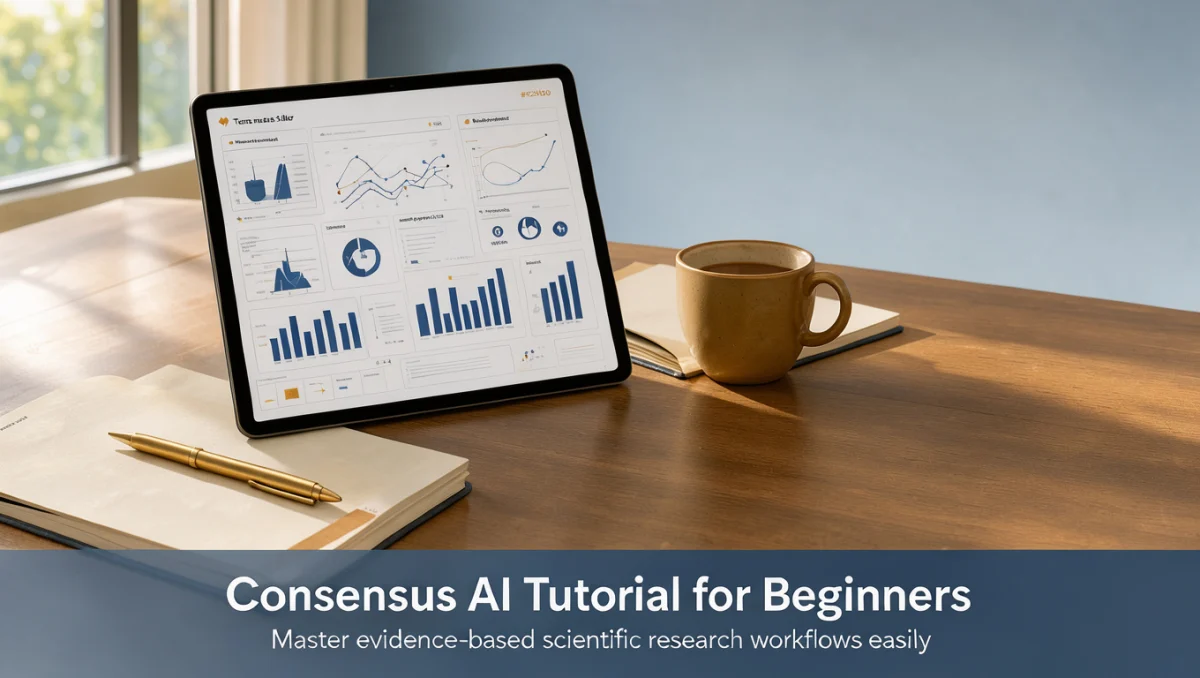
Looking for a reliable way to get evidence-based answers from scientific research? A consensus ai tutorial for beginners gives you a clear starting point. Manually scanning journal articles can eat up hours, while academic search engines built around scientific synthesis pull findings straight from published studies. This guide from Top App Review Sites shows you how the core search features work, how to synthesize results and how to judge sources with confidence.
Scholarly discovery platforms collect articles so you can find relevant research without hopping between paywalled journals and disconnected databases. To get real value from Consensus, you need to frame precise questions, read consensus indicators correctly and pull supporting context for your writing or decisions. Building these habits early keeps your research process dependable.
Quick verdict: Consensus earns an overall topappreviewsites score of 7.8 / 10. It suits students, researchers and knowledge workers who need evidence-backed answers from published papers. It is less suited to creative text generation or non-academic search tasks.
| Evaluation Criterion | topappreviewsites Summary |
|---|---|
| topappreviewsites score | 7.8 / 10 |
| Best for | Students, academic writers and analysts who need evidence-based summaries from scientific literature |
| Not ideal for | Creative copywriters, casual browsing or workflows that require non-academic commercial data |
| Key strengths | Academic paper discovery, claim extraction from published literature and research synthesis |
| What to check before buying | Confirm seat allocations, search limits and export options on the official Consensus website |
1. How topappreviewsites Reviewed Consensus
This review covers what Consensus is built to do, who it serves and how it compares with similar tools. We assessed it on seven criteria: features, ease of use, pricing and value, integrations, audience fit, support and competitive position. Plans, prices and limits change often, so check the official website before you buy. This article was researched and drafted with AI assistance, then reviewed and edited by the topappreviewsites Editorial Team.
2. Before You Start Your Research Workflow
Before running your first search, it helps to understand how scientific search engines differ from chatbots. Conversational tools produce freeform answers, while scholarly platforms retrieve and cite peer-reviewed papers to back each statement. Exploring modern Artificial Intelligence tools shows that academic assistants put citation integrity ahead of open-ended conversation.
2.1. Defining Clear Research Questions
Scholarly search tools perform best with questions about relationships, efficacy or comparative outcomes. Phrasing your inquiry as a direct question lets the engine identify relevant outcome variables and study populations.
- Frame queries around specific interventions, such as whether a particular lifestyle change affects a health outcome.
- Avoid single-word searches that return unfocused results from unrelated fields.
- Specify target conditions or contexts when your topic spans disciplines like education, medicine or sociology.
2.2. Understanding Evidence Synthesis
Scientific literature seldom reaches unanimous agreement on complex topics, which makes evidence synthesis essential. Scholarly search systems analyze findings across multiple publications and group outcomes into positive, negative or neutral trends that reflect the current state of research.
Independent resources such as Top App Review Sites can help you see how specialized search software differs from general productivity apps. Recognizing this difference prevents unrealistic expectations of absolute certainty on scientific topics.
3. Getting Started Workflow

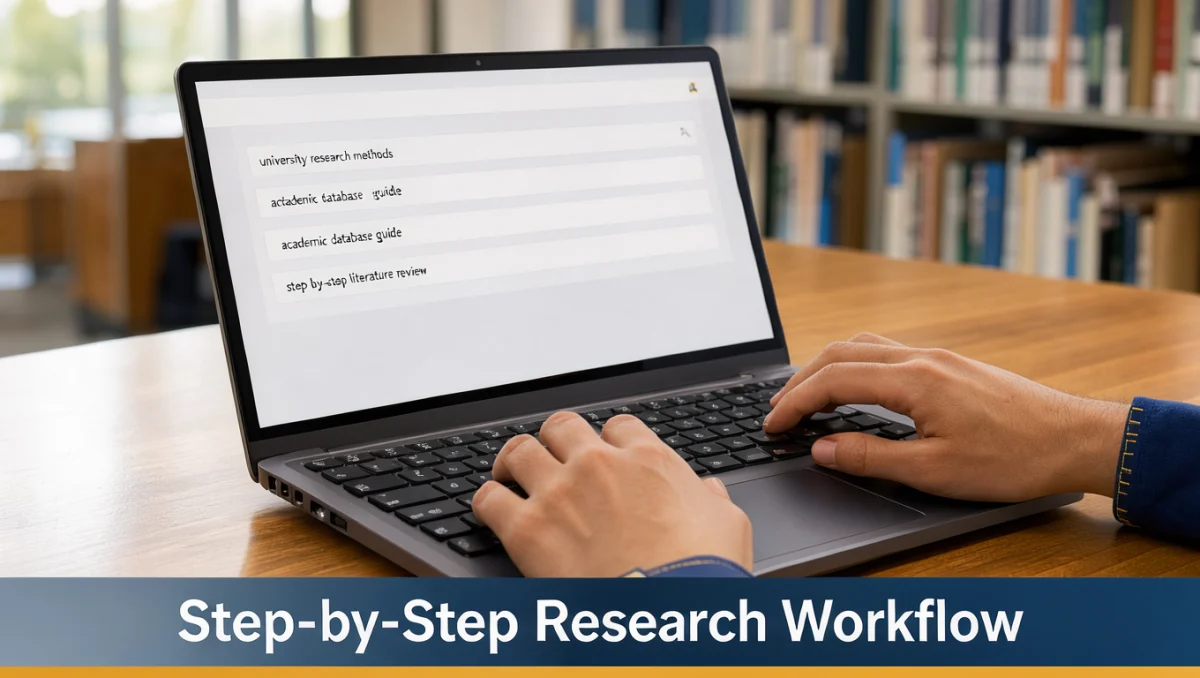
An effective workflow in Consensus moves through four stages: entering your query, filtering literature, reviewing paper takeaways and extracting citations. Following a repeatable process prevents research fatigue and keeps your sources organized.
3.1. Step 1: Crafting Your Initial Search Inquiry
Start by entering a well-structured question in the search bar. Synthesis engines parse questions more accurately than fragmented keyword lists because a question makes the relationship you want to investigate explicit.
For example, asking directly how sleep duration affects cognitive performance lets the platform pull findings from clinical trials and systematic reviews. If early results fall outside your scope, refine the wording by adding population details or specific measurement criteria.
3.2. Step 2: Applying Quality and Discipline Filters
Academic databases index millions of studies that differ widely in methodology, sample size and publication date. Filters help you narrow the catalog to the most relevant and rigorous papers.
- Filter by publication date when studying fast-moving technical or biomedical fields where older methods may be outdated.
- Select study designs such as meta-analyses or randomized controlled trials when writing a formal literature review.
- Narrow disciplines so educational studies stay separate from psychological or neurological papers on similar subjects.
3.3. Step 3: Interpreting the Synthesis and Paper Summaries
Once results load, review the top-level synthesis alongside individual study takeaways. The software highlights core findings extracted from abstracts, which helps you judge relevance before reading full manuscripts.
Note whether the wider literature leans toward consensus or shows divided outcomes. When studies disagree, examine their sample groups and methods to understand why results diverge.
3.4. Step 4: Extracting Citations and Synthesizing Notes
Collecting citations during the search phase prevents attribution errors later. Gather bibliographic metadata, digital object identifiers and key takeaway sentences for your reference list.
Export or record references systematically in your preferred reference manager. Organized notes ensure every claim in your report links back to an authentic publication.
4. Best Practices for Academic and Professional Research
Disciplined habits get the most out of scholarly search platforms while guarding against misinformation and loss of context. These tools speed up discovery, but critical human evaluation remains essential.
4.1. Cross-Referencing Primary Sources
Never rely only on an automated extract or abstract when citing crucial claims in formal work. Automated systems pull key phrases from abstracts, but full papers contain nuances, methodological limits and statistical qualifiers that shape the outcome.
Open the original publication to confirm the extracted finding matches the authors' overall conclusions. Verifying data in the full text protects your work from misinterpretation or oversimplification.
4.2. Combining Specific Questions with Broad Overviews
Begin with focused questions to collect direct answers, then broaden your terms to uncover alternative perspectives. Academic consensus shifts as new papers appear, and different disciplines often use different terms for the same phenomenon.
Tracking keyword variations across related studies helps you build a more complete bibliography. If a medical query returns few papers, try public health or sociological terminology to capture multidisciplinary research.
5. Common Mistakes to Avoid
Beginners often run into predictable problems when moving from ordinary web browsers to academic search platforms. Knowing these pitfalls keeps your investigation on track.
- Treating search extracts as the final authority: Automated summaries reflect published abstracts, not a definitive consensus across every discipline. Always inspect study designs and sample validity.
- Using loaded search phrasing: Queries with biased language tend to return papers that match that slant. Frame questions neutrally to capture both supporting and dissenting evidence.
- Ignoring study design hierarchy: A small observational study carries less evidentiary weight than a systematic review or meta-analysis. Check whether a study is preliminary or a rigorous trial.
- Skipping subscription terms: Platforms frequently update search quotas and team features, so confirm plan boundaries on the official Consensus website before committing to an enterprise subscription.
6. Frequently Asked Questions
What type of questions work best in Consensus?
Direct questions about cause, correlation or comparative effectiveness work best. Questions framed around specific interventions let the platform identify research outcomes across abstracts, whereas overly broad single terms produce unfocused lists.
How does an academic search tool differ from a general conversational AI?
Academic search platforms retrieve citations directly from published literature and link statements to real authors and journals. General chatbots generate prose from statistical word patterns and may invent references or describe studies that do not exist.
Should researchers read the original paper after reviewing a summary?
Yes. Always review the primary publication before citing evidence in formal work. Abstract summaries are useful for quick relevance checks, but the full study reveals methodology, sample sizes and nuances essential for accurate scholarship.
What should buyers check on the official Consensus pricing page?
Confirm current subscription tiers, monthly query allowances and team collaboration features directly on the official pricing page. Vendors adjust limits and package structures often, so verify before purchasing.
7. Final Verdict on Consensus
Consensus offers an accessible, evidence-focused way to explore literature for students, academics and professionals. By summarizing peer-reviewed papers and organizing findings into manageable overviews, it lowers the barrier to evidence-based writing. Automated summaries cannot replace careful reading of primary literature, but they speed up the initial discovery phase considerably.
| Criterion | Score /10 | Reason |
|---|---|---|
| Features | 8.0 / 10 | Offers focused scientific literature search, claim summaries and citation indexing across academic fields. |
| Ease of Use | 8.5 / 10 | The intuitive question-and-answer format lets beginners query research papers without complex syntax. |
| Pricing and Value | 7.5 / 10 | Prospective buyers should check the official pricing page to weigh search allowances against their workload. |
| Integrations | 7.0 / 10 | Verify compatibility with your preferred reference manager and document editor before buying. |
| Audience Fit | 8.5 / 10 | Well aligned with students, analysts and medical writers who need fast access to peer-reviewed evidence. |
| Support | 7.0 / 10 | Confirm support availability and knowledge base resources on the official vendor website. |
| Competitive Position | 8.0 / 10 | Maintains a clear identity focused on scientific consensus compared with general-purpose search platforms. |
Overall topappreviewsites score: 7.8 / 10
For independent researchers, college students and scientific writers who must check factual claims against peer-reviewed literature, Consensus provides an organized starting point. Corporate teams and casual web searchers may find specialized academic tools more restrictive than general search utilities.
Have questions about choosing research software for your team? Send them to the editorial team through topappreviewsites, or follow topappreviewsites on LinkedIn for ongoing software evaluations.